
The Landscape of Computer Science in 2025
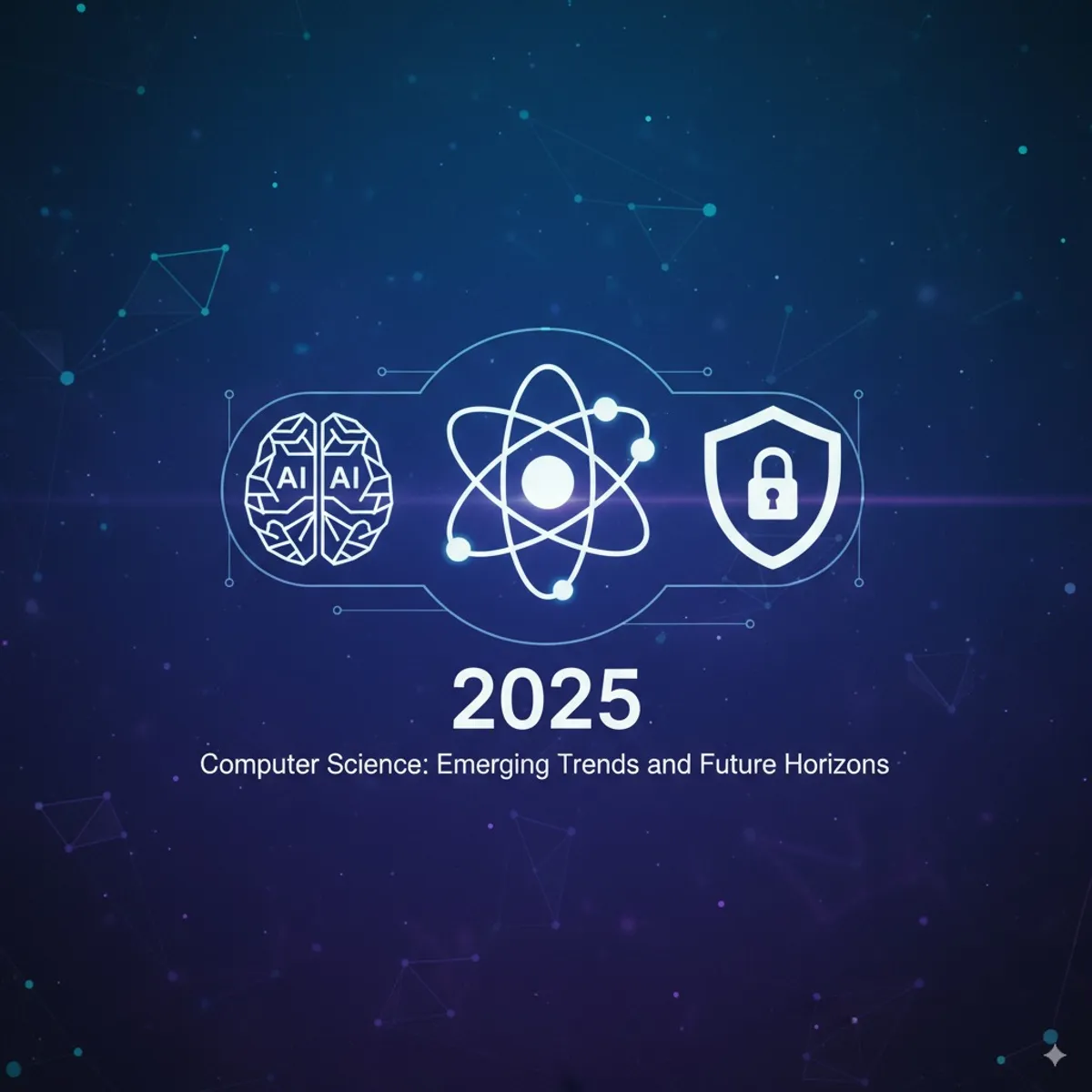
The year 2025 marks a pivotal moment in the evolution of computer science. We’re witnessing rapid advancements across various domains, pushing the boundaries of what’s possible and reshaping our digital world. From the ubiquitous presence of AI to the nascent but promising field of quantum computing, the future is now.
Artificial Intelligence: Beyond GPT-4
Artificial Intelligence continues its explosive growth, with models becoming increasingly sophisticated and integrated into everyday life. In 2025, we’re seeing:
Tip (Personalized AI Agents)
Expect highly personalized AI agents that anticipate your needs, manage your schedule, and even generate creative content tailored to your preferences. Think beyond simple chatbots to truly intelligent digital assistants.
- Generative AI Evolution: Beyond text and image generation, generative AI is now routinely producing complex code, 3D models, and even synthetic data for scientific research.
- Edge AI Dominance: AI processing is moving closer to the data source (edge devices), enabling faster, more secure, and more private applications in IoT, autonomous vehicles, and smart cities.
- Ethical AI Governance: With widespread AI deployment, robust frameworks for ethical AI development, fairness, and transparency are becoming standard practice.
The Quantum Leap: Quantum Computing Progress
While still in its early stages, quantum computing is making significant strides. In 2025, we’re seeing practical applications emerge from research labs.
Important (Quantum Supremacy to Quantum Utility)
The focus has shifted from merely demonstrating “quantum supremacy” to developing “quantum utility” – using quantum computers to solve real-world problems that classical computers cannot efficiently handle.
- Specialized Quantum Algorithms: New algorithms are being developed specifically for tasks like drug discovery, material science simulations, and complex financial modeling.
- Hybrid Quantum-Classical Systems: Most practical applications leverage hybrid systems, where quantum processors accelerate specific parts of a larger classical computation.
- Increased Accessibility: Cloud-based quantum computing platforms are becoming more mature, allowing researchers and developers easier access to quantum hardware.
Cybersecurity: The Perpetual Arms Race
As technology advances, so do the threats. Cybersecurity remains a critical frontier in 2025, with an ongoing arms race between attackers and defenders.
Warning (AI-Powered Threat Detection)
AI is a double-edged sword. While it enables sophisticated attacks, it’s also crucial for next-generation threat detection, predictive analytics, and automated incident response. Keeping up requires constant vigilance.
- Post-Quantum Cryptography: Research and standardization efforts for cryptographic algorithms resilient to quantum attacks are gaining urgency.
- Zero-Trust Architectures: The principle of “never trust, always verify” is becoming the default security posture across enterprises.
- Supply Chain Security: Increased focus on securing the entire software supply chain, from development to deployment, to mitigate risks from compromised components.
Sustainable Computing: Greener Tech
With growing awareness of environmental impact, sustainable computing is no longer a niche concern but a core aspect of design and development in 2025.
Note (Energy Efficiency in Data Centers)
Innovative cooling solutions, renewable energy sources, and more efficient hardware designs are drastically reducing the carbon footprint of large data centers.
- Green Software Engineering: Developers are adopting practices to write more energy-efficient code, optimizing algorithms, and reducing computational overhead.
- Circular Economy for Hardware: Emphasis on extending the lifespan of hardware, promoting repairability, recycling, and responsible disposal to minimize electronic waste.
- Resource-Aware AI: Developing AI models that are not only powerful but also less resource-intensive to train and deploy, reducing their energy consumption.
Conclusion
Computer Science in 2025 is a dynamic and exciting field. The interplay of AI, quantum computing, robust cybersecurity, and a commitment to sustainability will define the next generation of technological innovation. Staying informed and adaptable will be key to navigating these evolving horizons.
Recommended for You
Explore more articles on similar topics and continue reading.
The Evolution of Computing: From ENIAC to Quantum
Programming Languages 2025: Navigating the Evolving Landscape